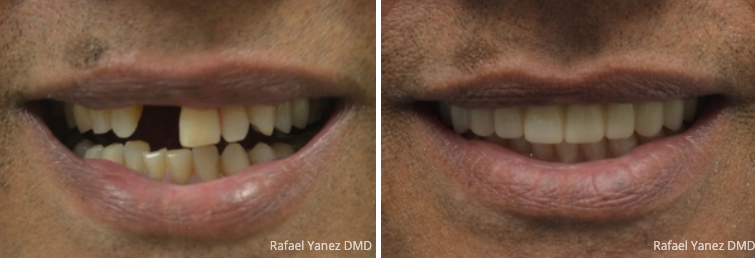
Dentures and Implant-Supported Dentures
Tooth loss is a common problem that many people experience. Fortunately, there are a multitude of restorative dental options available to help restore your smile and give your confidence and comfort while eating, speaking, and enjoying your life. Two of the most popular treatments for significant tooth loss are dentures and implant-supported dentures.

Quick Facts About Dentures and Implant-Supported Dentures
- Key Benefits: Traditional dentures typically suit most patients missing several or all teeth, while implant-supported dentures require adequate jawbone density and good overall health to support surgical placement.
- Potential Candidates: Traditional dentures are custom-fitted removable appliances taken from impressions of the gums, while implant-supported dentures attach to titanium implants surgically anchored in the jawbone.
- Procedure Details: A titanium post is surgically placed into the jawbone, allowed to fuse with the bone over several months, and then topped with a custom abutment and crown.
- Recovery Timeline: Traditional dentures typically require a few weeks of adjustment, while implant-supported dentures involve a longer timeline for healing and osseointegration before final placement.
Schedule a Complimentary Consultation
Learn how our highly trained team combines state-of-the-art technology with a gentle, patient-first approach. To book your free consultation, contact I.Dentical – All About Your Smile today.
What Are Dentures?
If you are missing a number of teeth, Dr. Rafael Yanez, a cosmetic dentist in Philadelphia can use dentures to restore functionality to your bite and fill in the gaps in your smile. Dentures are made from durable materials and are crafted to resemble your natural teeth. These removable dental appliances are also designed to maximize your comfort when worn and improve your ability to chew and speak.
Dentures can often serve as a suitable alternative for patients who may not be candidates for dental implants. Depending upon your individual circumstances, a complete or partial denture will be crafted. A complete denture is used to replace an entire row of missing teeth. A partial denture is used when only some teeth need to be replaced. In addition to improving the look and function of your smile, a partial denture can prevent adjacent teeth from shifting and reduce the risk of further dental complications. Whether you are in need of a partial denture or full dentures, our patients at I.Dentical – All About Your Smile often report a higher quality of life with these custom-made teeth replacements.

Who Is a Candidate for Dentures?
Most people who have lost several or all of their natural teeth due to decay, gum disease, or injury can be candidates for traditional dentures. They’re generally a good option for patients seeking a non-surgical, more affordable solution, or for those whose health conditions or bone density make implant surgery inadvisable. Candidates should have reasonably healthy gums, as dentures rest directly on the gum ridge, and be willing to adapt to a removable appliance that requires daily cleaning and periodic adjustments. Dentures can also serve as an interim solution while healing from extractions or preparing for future implant treatment. A dental evaluation helps determine whether full or partial dentures are the right fit for your specific needs.
What Does the Dentures Procedure Entail?
To create a custom denture that is easy to wear, the process may take a few appointments over the course of a few weeks. Dr. Yanez will take impressions and measurements of your mouth so the denture can be fitted with the highest degree of precision. You will have comprehensive fittings to ensure that your denture remains comfortably and naturally in place.
What Results Can I Expect from My Dentures?
During the first few days of wearing your new dentures, you may experience increased saliva flow, some difficulty chewing or speaking, or mild soreness. However, as you adjust to your new dentures, these reactions should quickly subside. Dentures require proper cleaning, good oral hygiene, and regular checkups with a dentist to help ensure your dentures are functioning at their best. Dr. Yanez will provide you with instructions on how to properly care for your dentures so they can last for years to come.
What Are Implant-Supported Dentures?
Many patients who are missing most or all of their teeth often use traditional removable dentures to restore their smiles. While effective, many people find these dental devices uncomfortable, ill-fitting, high-maintenance, and/or unnatural in appearance. Many individuals using this type of denture have reported a lack of confidence about their smile. Implant-supported dentures from Dr. Yanez can address these concerns. This innovative approach to tooth replacement uses a number of implants to secure a denture to the upper or lower jaw, or both, as needed. Implant-supported dentures offer a more affordable option than a full set of dental implants, and this procedure can also provide the strength, comfort, durability, and aesthetics many patients desire.
Implant-supported dentures can be an excellent option for many patients, but this procedure is not appropriate for everyone. Dr. Yanez is a Fellow of the International Congress of Oral Implantologists, and he will evaluate your teeth and oral structures to determine if you have the bone density needed for optimal results. It’s also important to be free of infection and in good general health. If he finds that you have insufficient bone mass, you may still have a number of appealing restorative techniques. Dr. Yanez can discuss the best choices for your unique needs and goals during your initial consultation.
Who Is a Candidate for Implant-Supported Dentures?
Good candidates for implant-supported dentures are usually individuals missing most or all teeth in an arch who want greater stability and function than traditional dentures provide. This option requires sufficient jawbone density to support implants, though bone grafting can help patients who’ve experienced bone loss. Candidates should be in good general health, as the process involves minor surgery and a healing period for osseointegration. Non-smokers and those without uncontrolled diabetes or untreated gum disease tend to have higher success rates. Implant-supported dentures may be especially well-suited for people frustrated with slipping, discomfort, or reduced chewing power from traditional dentures, offering a more secure, confident, and natural-feeling alternative. A consultation with Dr. Yanez can confirm candidacy based on bone health and medical history.
How Is the Implant-Supported Denture Procedure Performed?
A customizable procedure, implant-supported dentures can be tailored to suit your anatomic needs and desired results. Unlike a full set of dental implants, implant-supported dentures use only a few implants to anchor the dental appliance in place. Some patients can use as few as four implants for this procedure, a technique known as All-on-4®. Dental implants, whether you’re having one, four, or a full set, are placed the same way. A precise treatment plan will be developed that determines where exactly the best location for each implant will be. The titanium posts are then secured through the gumline and into the sturdy jawbone below. Once the bone has healed and grown strong around the implants, the dental appliance can be attached. A temporary dental appliance will be used during the recovery period, so you will never be without a functioning set of teeth.
What Results Can I Expect from My Implant-Supported Dentures?
Once the implant-supported denture is in place, you should be able to eat, drink, and speak with comfort and confidence. No more slipping appliances, no more uncomfortable rubbing, all while enjoying many of your favorite foods. Excellent oral hygiene is still necessary to keep your smile looking its best. However, unlike traditional dentures, brushing, flossing, and regular dental check-ups should be sufficient normal care.
Additional Frequently Asked Questions About Tooth Replacement Options
Dr. Yanez offers a range of advanced techniques to restore your smile. He has answered some of the most commonly asked questions about dentures and implant-supported dentures below. For additional information, we hope you’ll reach out to our friendly and knowledgeable team.
Are dentures or implant-supported dentures the better choice?
This is highly subjective and will depend on many factors unique to you. Your oral health, lifestyle, budget, and other considerations should be weighed to determine which option best suits your needs and goals. Dr. Yanez can provide guidance to help you decide on which method to use, but ultimately the choice is up to you. In some cases, implant-supported dentures may not be the best choice if you have insufficient jawbone density or if you have gum disease. Of course, we can provide treatment to improve your oral health if required.
Which one is more comfortable?
Most patients find implant-supported dentures to be the more comfortable of the two options. This is because they are secured to the jawbone, so the denture cannot slip or move around easily. As a result, soreness is minimized and confidence in speaking, smiling, and eating is often increased. Dr. Yanez makes every effort to provide a precise and comfortable fit with dentures as well as implant-supported dentures; however, broadly speaking, many people report that implants offer enhanced satisfaction in this regard.
Which one is more affordable?
Both dentures and implant-supported dentures are a more affordable option than a full set of dental implants. Between implant-supported and traditional dentures, removable dentures are the more cost-effective of the two. We understand budget is an important consideration for many individuals, and we will work with you to find a treatment that can fit within your lifestyle. That said, cost should not be the only, or even the most important, factor in making your decision. Our financing resources can help bring your treatment into your range if you prefer to pay over time rather than in one lump sum.
How do you care for dentures? How do you care for implant-supported dentures?
Implant-supported dentures require the same upkeep as your natural teeth: Twice-daily brushing and once-daily flossing, along with regular dental checkups. Dentures require a bit more maintenance to ensure they are long-lasting and free of damage or decay. Dentures must be kept wet, and should be stored in a cleansing solution or water when not being worn. Dentures should be brushed daily to remove plaque and food, and so should your gums, tongue and palate prior to inserting your dentures in the morning. We will provide complete instructions for you during your visit.
How long will my dentures or implant-supported dentures last?
Dentures are long-lasting and can hold up to years of wear and tear; however, they will require occasional maintenance due to normal changes in your mouth and erosion. Implant-supported dentures can last a lifetime with good care and excellent oral hygiene. Regardless of the treatment you choose, it’s always important to visit the dentist regularly to maintain your oral health.
If you’d like to learn more about dentures or implant-supported dentures, please contact our office and schedule a consultation with Dr. Yanez.